
⚡ TL;DR (Too Long; Didn't Read)
Learn how to safely install your window AC unit with our complete DIY guide. Discover bracket setup, sealing tips, and when to call a professional.
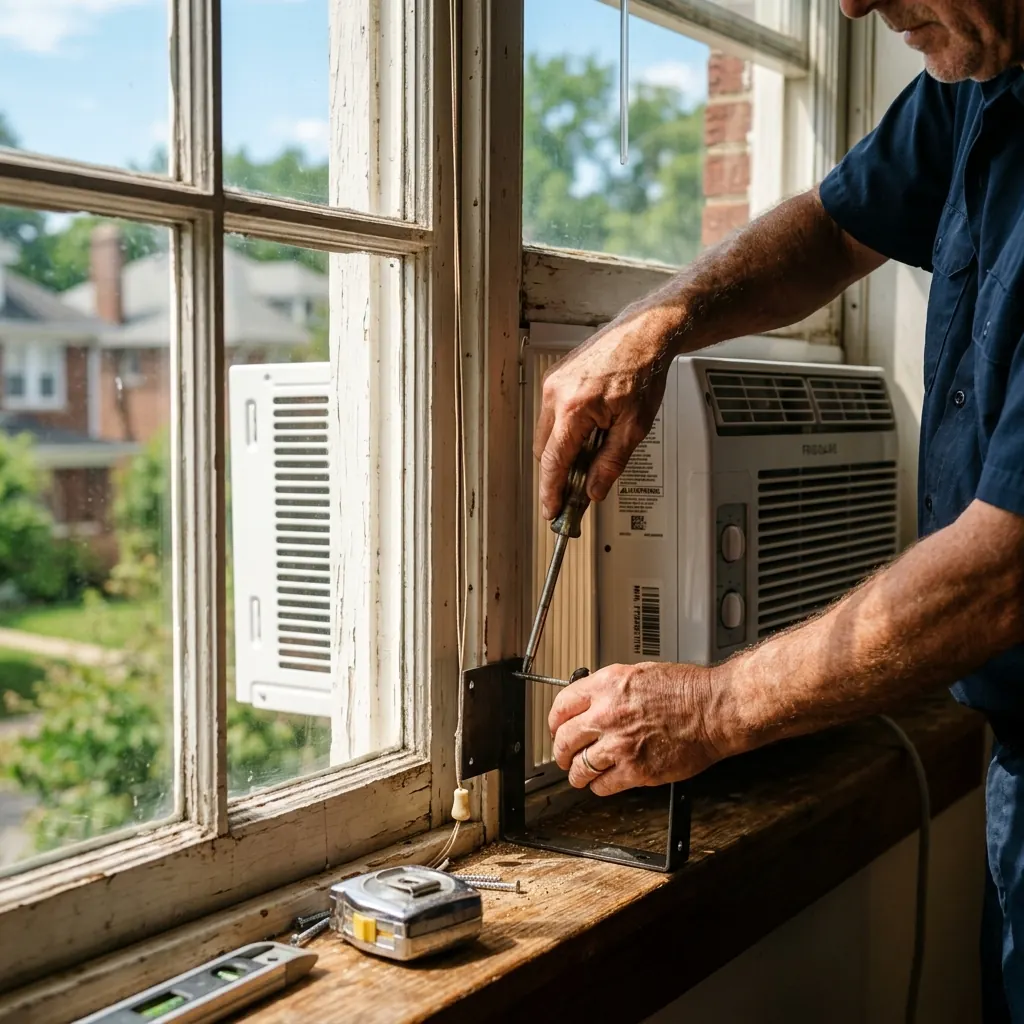
When the California summer heat hits, dropping a heavy AC unit out of a window is a risk you shouldn’t take. But if you’re handy with tools, have a standard window frame, and follow the right steps, you can absolutely do this yourself. Our DIY window AC installation guide covers the essential steps, from safely securing the bracket to creating a tight weather seal. Let’s get that cold air blowing without cracking your plaster or risking your safety deposit.
Table of Contents
1. Measure and Prepare Your Window
Need a pro to handle this?
Get a real price quote in under 5 minutes.
Before you even unbox the machine, measure your window opening. Most standard units fit double-hung windows perfectly, but if you have a horizontal sliding window or a casement crank window (common in modern Bay Area condos), standard accordion panels will leave massive air gaps. You will need custom plexiglass inserts.
Clean the window sill thoroughly. Dirt and debris will prevent the weatherstripping from sticking, leading to drafts and street noise leaking into your room. If the wooden frame is rotting or soft to the touch, do not proceed. The wood must be solid to support the heavy weight of the compressor.
2. Install the Exterior Support Bracket
This is the most critical step. The biggest mistake people make isn’t buying the wrong air conditioner; it’s trusting a century-old sill to hold sixty pounds. Antique wooden frames snap under pressure. You must use a heavy-duty, no-drill exterior support bracket.
- Assemble the bracket: Follow the manufacturer’s instructions to attach the legs and support arms. Ensure all nuts and bolts are tightened completely.
- Position it correctly: Rest the bracket on the window sill. It should tilt very slightly backward (about half a bubble on a level) so condensation drains outside, not onto your interior floor.
- Lock it in: Most modern brackets use pressure pins to lock into the window tracks without drilling. If you live in an older home with lath-and-plaster walls, drilling can cause severe damage. Always opt for the drill-free setups to protect your security deposit.
3. Lift and Secure the AC Unit
Window units are heavy, awkwardly weighted, and dangerous if mishandled. Do not lift it alone. Have a friend help you lift the chassis.
Carefully lower the unit onto the bracket. Keep your hands clear of the sharp condenser coils on the back. Close the window tightly behind the top rail of the AC. This downward pressure from the window sash is what prevents the unit from falling backward. Once it is resting securely, extend the side accordion panels to meet the window frame. Secure the unit to the window sash using the provided L-brackets and screws. This locks the window in place so it cannot be opened from the outside.
4. Seal the Gaps and Block the Drafts
Shoving cheap foam into the gaps fails fast. Salty coastal air and harsh sunlight ruin standard tape in weeks. Creating a heavy-duty soundproof seal requires commercial-grade weatherstripping.
- Push the thick foam seal between the upper and lower window sashes to block drafts from the top.
- Use high-density weather tape around the perimeter of the accordion panels.
- Double-check the exterior for any daylight shining through the edges. If you see light, air is escaping.
5. Power Safety and Smart Plugs
Air conditioners draw a massive amount of power. Never plug an AC unit into a standard extension cord or a power strip. This is a severe fire hazard. Plug the unit directly into a grounded wall outlet. If the cord doesn’t reach, you must use a heavy-duty appliance extension cord rated specifically for air conditioners.
For a modern upgrade, consider routing the power through a heavy-duty smart plug. This allows you to turn the unit on remotely from your phone, ensuring your room is cold before you even get home from work.
6. When to Stop and Call a Professional
If you hit a snag, stop immediately. Smashing an 80-pound compressor into the street below is a catastrophic liability. You should call for backup if:
- Your window is a horizontal slider or a crank casement window that requires custom plexiglass.
- Your HOA has strict exterior appearance rules prohibiting makeshift wooden stands.
- The sill is rotting, or the window frame feels unstable.
Frequently Asked Questions (FAQ)
Can I install a standard window AC in a horizontal sliding window?
Yes, but not out of the box. Since horizontal sliding windows slide side-to-side, standard accordion panels leave huge openings. You will need to fabricate a custom clear plexiglass insert to fit the exact vertical gap and block the heat completely.
Why is my window AC unit leaking water inside my room?
This happens when the unit is not tilted correctly. The exterior bracket must have a slight downward slope toward the outside so that the condensation pan can drain. If it’s perfectly level or tilted inward, water will overflow onto your interior floor.
If you realize you need a safety net, we are right here. We provide professional window AC and portable AC installation that passes strict HOA inspections. Want to skip the heavy lifting? Book your installation online today and let our Vetted Pros handle the precision work.
Looking for more information on home appliance safety? Check the Department of Energy guide on room air conditioners.