
⚡ TL;DR (Too Long; Didn't Read)
Wondering how does a window AC work? Discover the 5 secrets behind optimal cooling, how the internal components function, and tips to maximize energy efficiency.
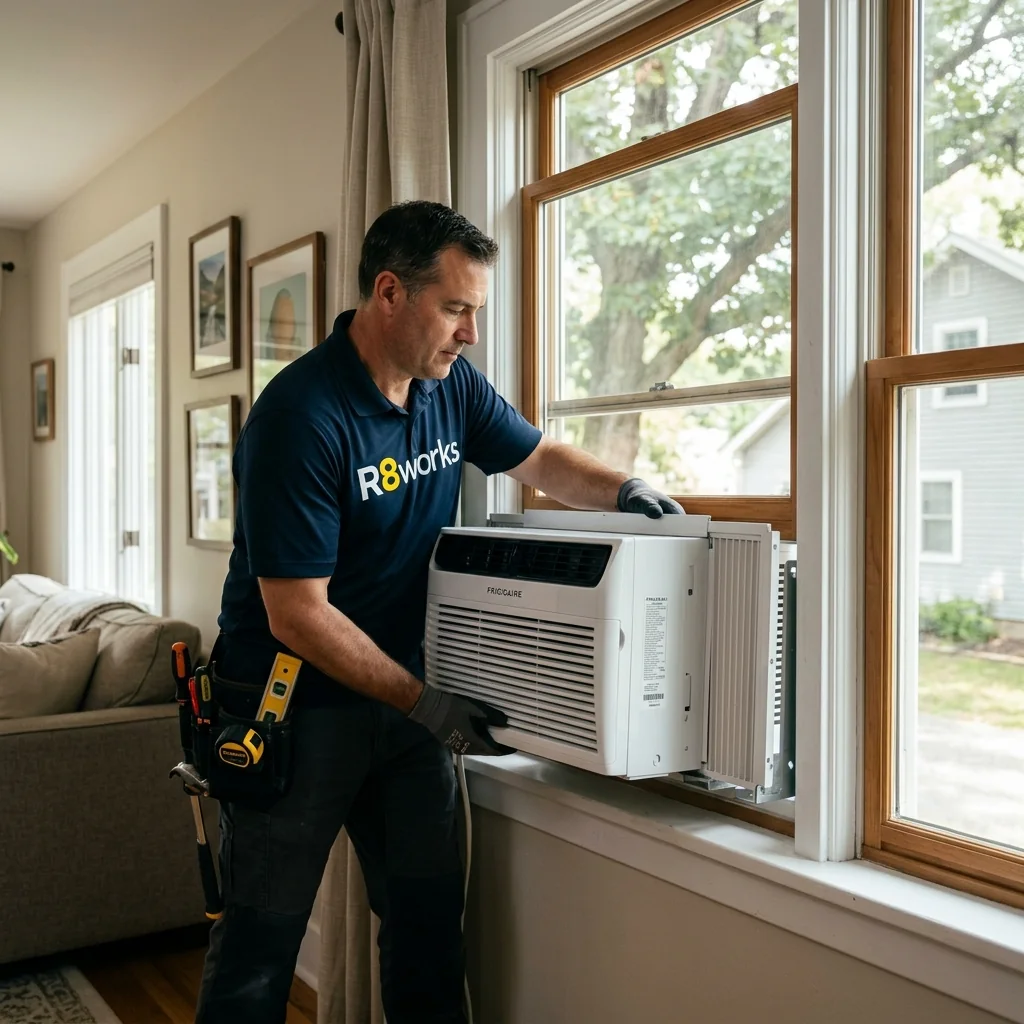
Table of Contents
The Basics: How Does a Window AC Work?
Need a pro to handle this?
Get a real price quote in under 5 minutes.
When the summer heat hits the Golden State, most of us just want to press a button and feel that blast of cold air. But if you’ve ever stopped to wonder exactly how does a window AC work, the process is actually fascinating. Instead of magically “creating” cold air, your window unit is essentially a heat transfer machine. It acts like a sponge for thermal energy, soaking up the heat and humidity from inside your bedroom or living room, and wringing it out into the outdoors. This process relies on a continuous loop of physics and a special chemical called refrigerant.
The 3 Core Components of Your Air Conditioner
To understand the mechanics, we need to look under the hood. A window air conditioning unit might look like a single metal box, but it is actually divided into two distinct zones: the indoor-facing cold side and the outdoor-facing hot side. Between these zones are three critical components.
1. The Compressor (The Heart of the System)
Sitting on the outdoor side of the unit, the compressor is the heavy lifter. Its job is to squeeze the refrigerant gas tightly. When gas is compressed, its pressure and temperature skyrocket. This high-pressure, super-heated gas is what drives the entire cooling cycle. If you ever hear a low hum or vibration from your window unit, that is the compressor hard at work.
2. The Condenser Coils (The Heat Exchanger)
Once the compressor heats up the refrigerant, it pushes it into the condenser coils (the metal fins you see on the outside of the window). Because the refrigerant is now hotter than the summer air outside, the heat naturally flows out of the coils and into the atmosphere. A fan blows across these coils to speed up the heat release, which is why the air blowing out the back of your AC is always hot.
3. The Evaporator Coils & Fan (The Cold Breeze)
After shedding its heat, the refrigerant cools down and turns back into a liquid. It then travels to the indoor side of the unit and enters the evaporator coils. Here, the liquid is allowed to rapidly expand back into a gas, which causes its temperature to drop dramatically. The indoor fan pulls the warm air from your room over these freezing-cold coils, cooling the air before blowing it right back at you.
The Refrigerant Cycle: A Step-by-Step Guide
The entire operation happens simultaneously in a closed loop. The indoor fan pulls warm room air over the cold evaporator coils. The refrigerant inside the coils absorbs the heat, turning into a warm gas. The compressor grabs that gas, pressurizes it to make it even hotter, and shoves it into the outdoor condenser coils. The outdoor fan blows over the condenser coils, dumping the heat outside. The refrigerant cools, turns back into a liquid, and heads back indoors to start all over again. As an active the local area, we see this cycle running constantly in homes across the region.
Why California Climates Demand Precise AC Installation
While understanding how does a window AC work is great, getting the unit installed correctly is what actually keeps your home comfortable. California has incredibly diverse micro-climates, and your AC installation strategy needs to match your zip code.
For instance, if you are living in the Central Valley, the intense summer sun beats down relentlessly on older homes. When we handle window AC installations in Davis or Sacramento, securing a heavy unit in an old, sun-baked wooden window frame requires heavy-duty support brackets and meticulous weatherstripping. If the seal isn’t completely airtight, that 105-degree air will leak right back in, forcing your compressor to run non-stop and driving up your energy bills.
Conversely, the Bay Area presents its own unique challenges. The famous San Francisco fog brings heavy moisture. If you need AC installation in San Francisco, especially in historic neighborhoods with brittle lath-and-plaster walls, the unit must be pitched at the exact right angle. If a window unit is perfectly level, the condensation extracted from the foggy air will pool inside the machine, leading to rust, mold, and eventual water damage to your windowsill. It must be tilted slightly backward so the water can drip harmlessly outside.
Common Problems When Your Unit Works Overtime
Even the best AC units can struggle if they aren’t maintained. Dirty air filters are the number one reason window units fail; they choke the airflow, causing the cold evaporator coils to literally freeze into a block of solid ice. According to the Department of Energy, simply replacing a dirty, clogged filter can lower your air conditioner’s energy consumption by 5% to 15%.
If you have struggled to install your unit, or if your window frames feel too old or fragile to support a 60-pound machine, you don’t have to risk a dangerous DIY disaster. Our vetted pros know exactly how to secure heavy appliances in older California homes without causing structural damage. If you want peace of mind, reach out to our professional AC installers today. We will make sure your unit is mounted safely, sealed tightly, and ready to keep you cool all summer long.
While we’re on the subject of heavy lifting, if you’ve recently purchased new home gym gear, don’t miss our guide to Rogue workout equipment assembly.