TV Mounting in San Francisco
Available in San Francisco Today

TV Mounting in San Francisco

Get your TV securely mounted in San Francisco by verified pros. From high-rise condos to classic townhomes, we bring the right tools to get it done perfectly.
4.94 from 8,014 verified reviews company-wide 14 years in California
$68–$249 typical

Depends on TV size, wall type, and whether cables are concealed

Get a Free Quote in 5 Minutes

TV mounting in San Francisco — an R8Works tech lifting a flat-screen onto its bracket in a condo overlooking the Bay Bridge and the city skyline
Verified Professionals
Satisfaction Guaranteed

Why hire us?

Perfectly Level

We use laser levels to ensure your TV is perfectly straight, every single time.

Safe & Secure

We mount into studs, brick, or concrete using heavy-duty hardware rated for your TV weight.

Done in 45 Mins

Our experienced pros work efficiently to get your entertainment system up and running fast.

No Hidden Fees

Complex wall? Needed a bracket? We explain all costs upfront before starting work.

Services Included & Excluded

Complete transparency on what our service covers.

✓ Included

  • Unboxing and inspection of TV
  • Mounting bracket installation on wall (wood/drywall)
  • Secure mounting of TV
  • Connecting HDMI/Power cables
  • Basic cleanup of area
  • Wall inspection
  • Proper mount selection
  • Location advice

✕ Excluded

  • × Concealing wires inside the wall (Add-on)
  • × Mounting on Brick/Stone/Concrete (Add-on)
  • × Soundbar mounting (Add-on)

How it works

Four steps, and you can stop after any of them.

  1. 1

    Tell us about the job

    A few questions online. No phone call, no credit card, nothing to sign.

    about 2 minutes
  2. 2

    Get your exact price

    We read your answers and photos, then text you a firm figure — not an estimate to be revised on the day.

    within 5 minutes
  3. 3

    Pick a time that suits you

    Same day is often available. You are not committed to anything until you choose one.

    you decide
  4. 4

    A vetted pro handles your TV Mounting

    They arrive with the right tools, do the work, and clear up before they leave.

    the price you agreed

Recent work in San Francisco

Photographs of the work, not stock images.
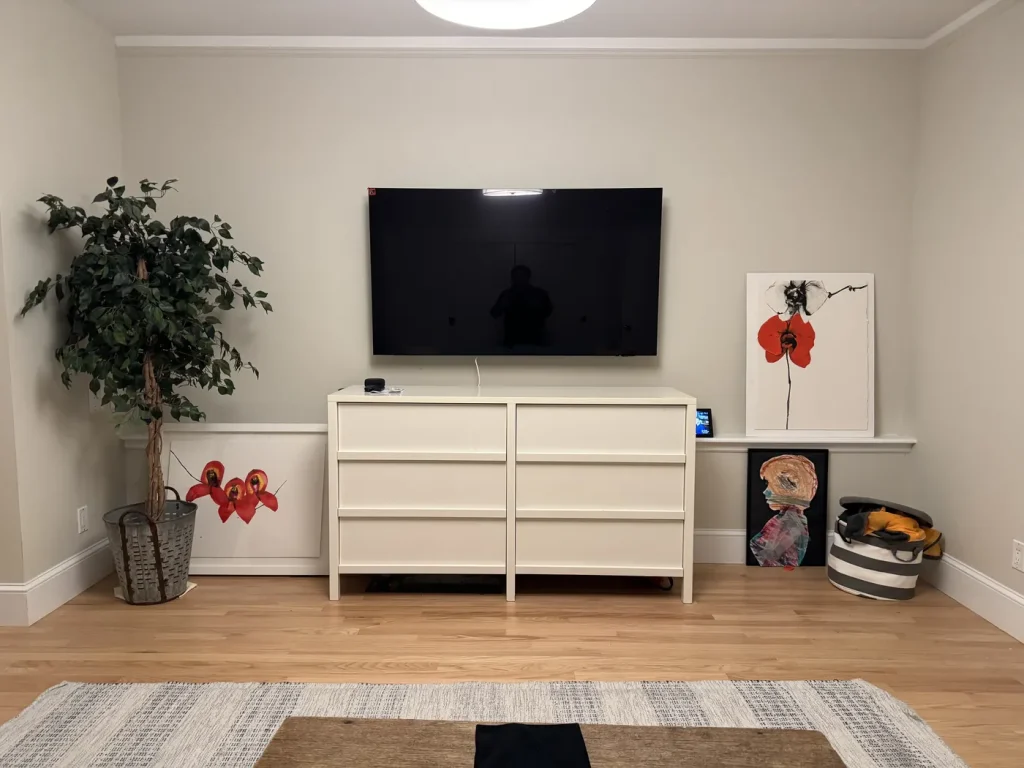
  • Flat screen mounted flush to the wall above a dresser in a San Francisco living room, with the cable dropped straight to the unit below
    San Francisco Flat screen mounted flush to the wall above a dresser in a San Francisco living room, with the cable dropped straight to the unit below
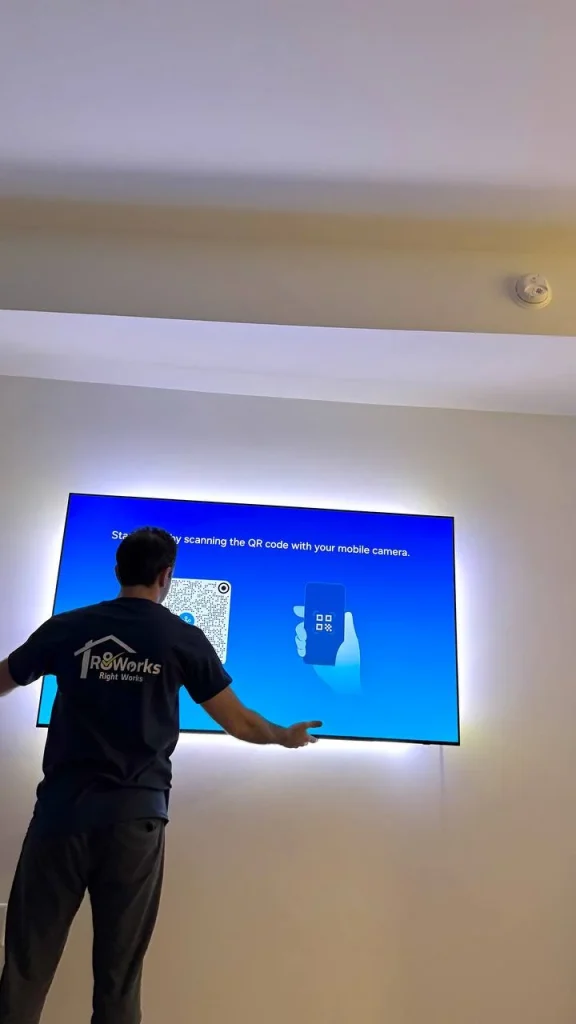
  • Flat screen TV mounting completed on a white wall in a San Francisco home, featuring LED backlighting around the display during final setup.
    San Francisco Flat screen TV mounting completed on a white wall in a San Francisco home, featuring LED backlighting around the display during final setup.
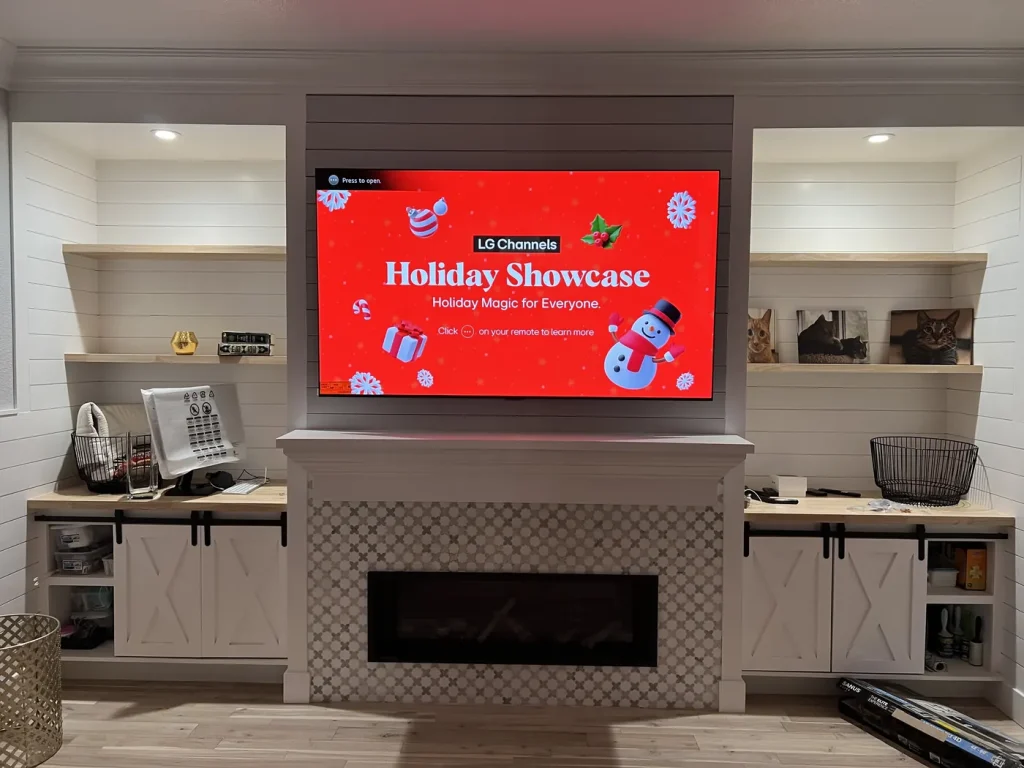
  • Flat screen mounted on a shiplap panel above the fireplace in a Bernal Heights living room, framed by built-in shelves on both sides
    Bernal Heights Flat screen mounted on a shiplap panel above the fireplace in a Bernal Heights living room, framed by built-in shelves on both sides
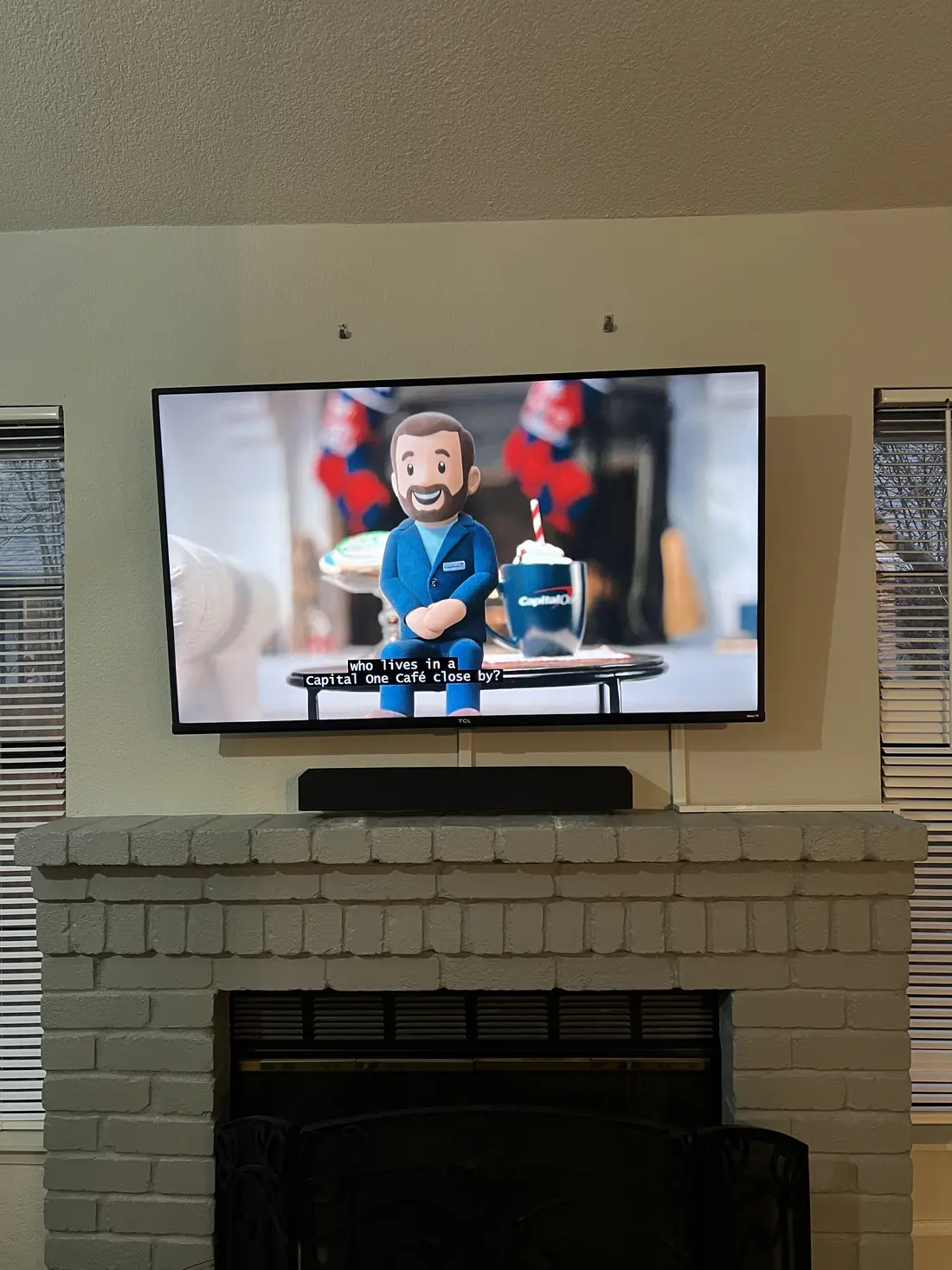
  • Flat screen mounted above a painted-brick fireplace in a Castro living room, with the soundbar set on the mantel below
    Castro Flat screen mounted above a painted-brick fireplace in a Castro living room, with the soundbar set on the mantel below
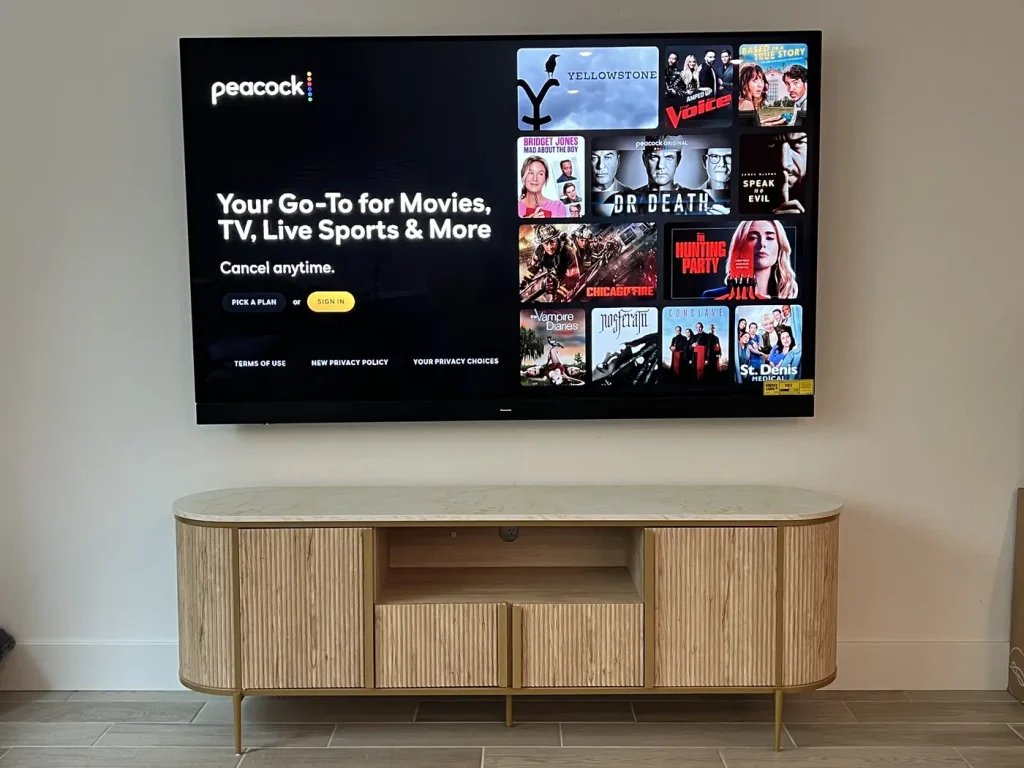
  • Flat screen mounted flush to the wall above a fluted-oak media console in a South of Market living room
    South of Market Flat screen mounted flush to the wall above a fluted-oak media console in a South of Market living room

5 recent tv mounting jobs in San Francisco.

See all our work →

Enterprise B2B Solutions

Property Managers & Landlords in San Francisco

Do you manage apartments, condos, or office spaces in San Francisco? Protect your walls by having our professional team handle tenant TV installations. We use specialized hardware that minimizes drywall and plaster damage, ensuring full compliance with local seismic codes.

Certified Installers
Fully vetted & trained
White-Label Service
Seamless integration
Commercial TV mounting in San Francisco — a boardroom display mounted above the city skyline, presenting to the team seated at the table
Accepting New Partners

Technical Challenges in San Francisco

Before anyone can tell you what it costs to mount a television in San Francisco, somebody has to work out what your wall is made of. That one question decides the anchor, the bracket, the time on site, and whether the plaster survives the afternoon.

This city has three answers to it. A flat off Valencia Street built in 1903 behaves nothing like a Nob Hill apartment with a steel frame behind the paint, and neither behaves like a SoMa loft where the wall is either poured concrete or a steel stud thin enough to bend with your thumb. Get the wall right and the job is an hour. Get it wrong and it is a repair.

Below is how to tell which one you own from inside your own living room, before anybody turns up with a drill.

1. Pre-1906 Victorian and Edwardian — lath and plaster

Most of the housing that survived the earthquake, and most of what went up quickly afterwards, is wood framing covered in narrow timber slats with plaster pushed through the gaps between them. If your home predates 1906, or was rebuilt in the decade after, this is almost certainly what sits under the paint.

How to tell from inside. Knock on the wall: plaster sounds dense, drywall sounds hollow. Push a pin into an inconspicuous spot — drywall takes it easily, plaster resists and leaves grit on the tip. A cheap stud finder lights up almost everywhere, because it is reading the timber slats rather than the studs behind them. And when you do find real studs they are rarely 16 inches apart; 18 to 24 is normal in framing that predates the standard.

Why it fails. Plaster holds itself up by squeezing through the gaps between the slats and hardening into keys on the far side. Those keys are a century old and brittle. Drive a standard drywall anchor into them and they crumble, the anchor spins, and a fist-sized patch of dust comes down with it. The answer is not a better anchor. It is finding the timber and using a lag bolt.

Four districts here go into that in depth, and the detail changes street by street: the Castro, the Mission District, Bernal Heights and Potrero Hill. Noe Valley, the Haight, the Richmond and most of the Sunset sit in the same category, and we work in all of them.

2. Pre-war apartment buildings — steel frame and masonry

The dense apartment stock built roughly between 1910 and 1940 is a different animal. Behind the plaster is brick or hollow clay tile, and behind that a steel frame. There is often no timber stud anywhere in the wall you want to use.

How to tell from inside. The building is four storeys or more with a shared entrance lobby. Interior walls feel cold to the back of your hand. A magnet drags rather than snapping. A stud finder returns nothing useful at all, because there is nothing wooden in there to find.

Why it is easier than it looks, and harder than it sounds. This wall is stronger than a Victorian one, not weaker. It needs masonry bits and sleeve anchors, and it holds a heavy screen without complaint. What makes it difficult is noise: most of these buildings are co-ops with board rules on working hours, and drilling masonry is loud. The scheduling is usually harder than the mounting. Nob Hill covers this stock in detail, and Russian Hill, Pacific Heights and much of the Marina behave the same way.

3. Modern high-rise and converted loft — metal studs and concrete

Anything built or converted since the 1990s uses light-gauge steel studs, and any converted industrial building has poured concrete or exposed brick on at least one wall. The two sit side by side in the same apartment and they need opposite hardware.

How to tell from inside. Run a magnet along the wall. If it snaps firmly to a line of screw heads at regular spacing, that is a steel stud. Where it finds nothing at all and the wall will not take a pin, that is concrete.

Why it fails. Light-gauge steel is the one people underestimate. It holds a wood screw badly, and a heavy screen on the wrong fixing does not fall on day one — it leans out from the wall over months, which is worse, because nobody notices until the bracket has already deformed. Toggles that lock behind the steel flange are what actually carry the weight. South of Market goes into this properly, and Mission Bay, Rincon Hill and Dogpatch are built the same way.

What this means when you book

You do not have to identify your wall correctly before you book. That is our job on arrival and it takes about two minutes. Knowing roughly which of the three you have simply means the van carries the right anchors the first time, and the visit is one visit.

If you are not sure, send a photo of the wall and the room and we will tell you before we quote. If you would rather do the job yourself we will still tell you what to buy — the advice is free either way, and we are usually working somewhere close by nearby areas.

For rentals and buildings with a board, check what your lease or HOA actually asks for before work starts. The San Francisco Department of Building Inspection publishes the permit rules, and ordinary residential TV mounting falls well outside them.

San Francisco neighborhoods and ZIP codes we cover

Every San Francisco ZIP code is inside our service area — 94102 through 94134, and 94158 in Mission Bay. The six districts with their own pages are the ones whose buildings needed a longer explanation, not the only places we work. Find your neighborhood below; the ZIP code is what tells the van which anchors to carry.

  • 94102 — Civic Center, Hayes Valley, Tenderloin, Lower Nob Hill, Mid-Market
  • 94103 — South of Market (SoMa)
  • 94104 — Downtown
  • 94105 — Embarcadero, Rincon Hill
  • 94107 — Potrero Hill, Dogpatch, Central Waterfront
  • 94108 — Nob Hill, Chinatown, Union Square
  • 94109 — Russian Hill, Polk Gulch
  • 94110 — Mission District, Bernal Heights, Inner Mission
  • 94111 — Financial District
  • 94112 — Excelsior, Ingleside, Outer Mission, Sunnyside, Crocker-Amazon, Mission Terrace, Oceanview
  • 94114 — The Castro, Noe Valley, Eureka Valley, Corona Heights, Mission Dolores, Upper Market
  • 94115 — Pacific Heights, Lower Pacific Heights, Japantown, Western Addition, Anza Vista
  • 94116 — Parkside, Outer Sunset
  • 94117 — Haight-Ashbury, Cole Valley, Alamo Square, Lower Haight, Duboce Triangle, Ashbury Heights, NoPa
  • 94118 — Inner Richmond, Central Richmond, Laurel Heights, Presidio Heights
  • 94121 — Outer Richmond, Sea Cliff
  • 94122 — Inner Sunset, Central Sunset, Golden Gate Heights
  • 94123 — Marina District, Cow Hollow
  • 94124 — Bayview–Hunters Point, Silver Terrace, India Basin
  • 94127 — West Portal, Forest Hill, St. Francis Wood, Miraloma Park, Monterey Heights, Westwood Park, Balboa Terrace
  • 94129 — Presidio
  • 94130 — Treasure Island
  • 94131 — Glen Park, Diamond Heights, Twin Peaks, Forest Knolls, Midtown Terrace
  • 94132 — Parkmerced, Lakeshore, Merced Heights, Merced Manor
  • 94133 — North Beach, Telegraph Hill
  • 94134 — Portola, Visitacion Valley, McLaren Park
  • 94158 — Mission Bay

Want the screen recessed into the wall itself, with the console and every cable hidden inside it? That is carpentry rather than a bracket — see TV wall installation in San Francisco.

Your Local San Francisco TV Mounting Experts

Mounting a TV can be a fun weekend project. You've totally got this if you want to tackle it yourself. But if you open up the box, look at the wall, and decide you'd rather spend your Saturday doing something else—or if you just run into a tricky stud situation—give us a call. We offer free advice over the phone, and if you want a second pair of hands, we're right around the corner. No pressure, just a friendly neighborhood team ready to help.
100%
Seismic Secure
5★
Top Rated
Same-Day
Appointments

Customer Reviews
4.9 (83 reviews)

Luna V

They installed a full-motion mount in my apartment. I can pull the TV out two feet and turn it 90 degrees to watch from the dining area. The cables are tied up so they don't pinch when it moves.

Ryan O

They mounted my TV perfectly centered between two sconces. He measured the exact distance from the left and right walls to ensure it was symmetrically flawless. Great attention to detail.

Richard U

I'm extremely picky about things being level. The tech hung the bracket, checked it with a level, hung the TV, and then fine-tuned the leveling screws on the brackets. Absolutely perfect.

Nathan M

Very good service. Mounted my Vizio and hid the cables in the wall using a brush plate kit. It looks incredibly clean and modern in my living room.

Samuel C

Excellent service in the Outer Sunset. The salt air rusts everything outside, so he used stainless steel hardware for my patio TV mount without me even having to ask.

Frequently Asked Questions

Knock on the wall. Plaster sounds dense and solid, modern drywall sounds hollow. Push a pin into an inconspicuous spot — drywall takes it easily, plaster resists and leaves grit. If the building predates 1906, assume plaster until proven otherwise.
Anything built or converted since about 1990. That means South of Market, Mission Bay, Rincon Hill, Dogpatch and the newer towers downtown. Older districts are wood framing with plaster, and pre-war apartment buildings are steel frame with masonry infill.
Your lease decides it, not the city. Most leases allow small fixings and ask that holes be filled on exit, and some prohibit drilling entirely. Buildings with a co-op or HOA board often add their own rules on working hours and lift access. Ask before you book and we will work to whatever the answer is.
Yes, and we do it every week. The plaster itself carries nothing — the load goes into the timber behind it with lag bolts. What fails is a standard drywall anchor set into brittle plaster keys, which is exactly why the wall type has to be identified before the first hole.
A bracket bolted into structural timber or masonry is considerably more secure than a television standing on furniture. The fixing is not the weak point in a quake — an unsecured screen on a sideboard is.
Yes, we cover the whole city — every ZIP code from 94102 to 94134, and 94158 in Mission Bay. The district pages exist because a handful of areas have building quirks worth writing about at length, not because they are the only places we work.
In drywall and steel-stud walls, yes, and it is routine. In lath and plaster it depends on what the cavity actually contains — a century of retrofitted wiring, ducting and firestopping often leaves no clear run, and forcing one does more damage than it hides. In masonry it is not possible without a surface conduit. We tell you which of the three you are in before we start, not after.
About an hour on drywall or steel studs. Plaster over timber and masonry both take longer, usually ninety minutes to two hours, because finding solid material and drilling it cleanly is slower than drilling drywall. Concealing cables inside the wall adds time again and is not always possible in a masonry building.
Most San Francisco jobs land between $68 and $249. Three things move the price: the wall — drywall is quickest, lath and plaster and masonry take longer — the size and weight of the screen, and whether the cables are concealed inside the wall. Send a photo of the wall and the room and you get the price before you book; confirming the wall type on arrival is part of the visit, not an extra.
Usually, yes. Crews are working somewhere in the city most days, so a morning request is often done the same afternoon. Plaster and masonry walls need the longer slot, so say which building you are in when you book and the right van comes the first time.
Get a Free Quote
Home Quotes