
⚡ TL;DR (Too Long; Didn't Read)
Wondering if you should hire someone to mount your TV or do it yourself? Discover what you need for a DIY install and when a quick call to a professional is the smarter choice.
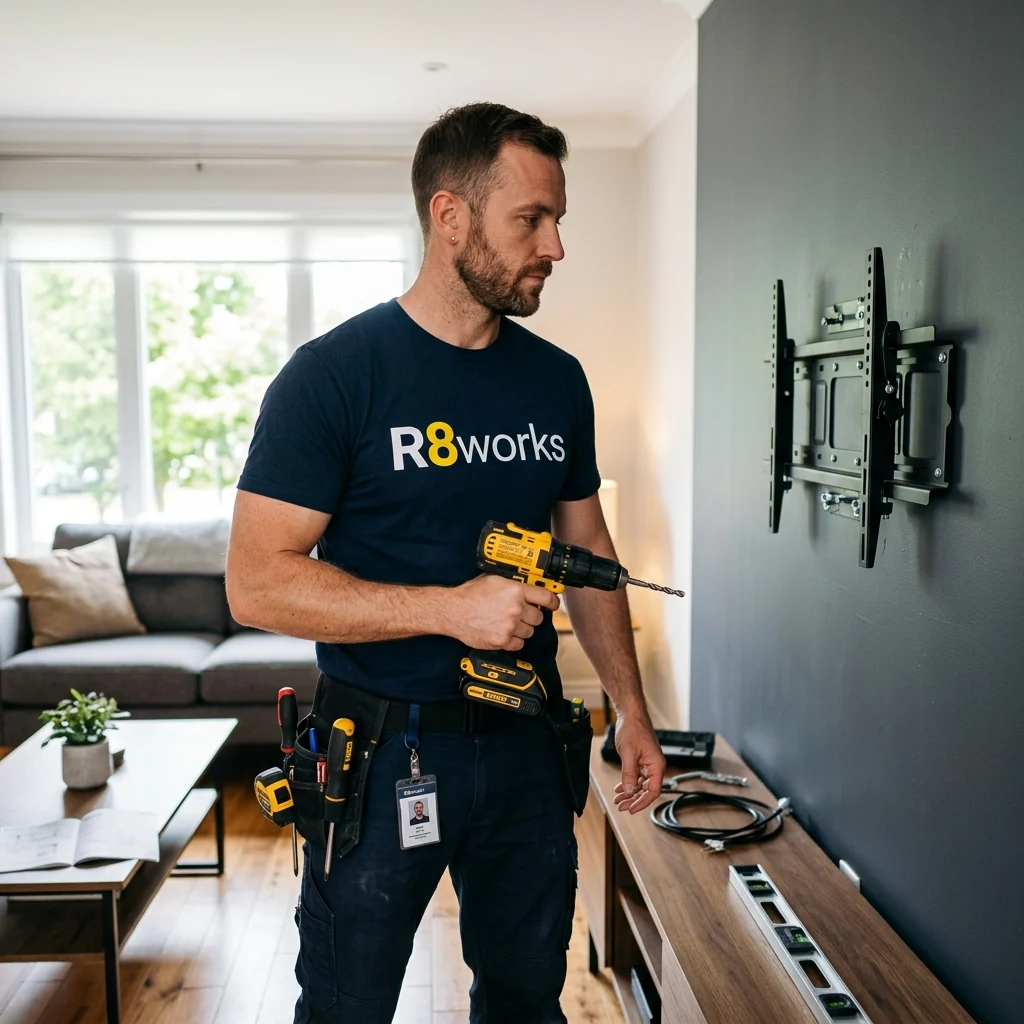
Should you hire someone to mount your TV, or is it a job you can tackle yourself? The honest answer is that most people can mount a TV themselves with a few basic tools and an hour or two of focused effort. However, a few situations—like hanging heavy screens on older walls or dealing with complex wiring—are definitely easier with a bit of help, and we are just one phone call away either way.
Table of Contents
You Can Probably Do This Yourself
Need a pro to handle this?
Get a real price quote in under 5 minutes.
There is an immense feeling of satisfaction that comes from stepping back, looking at your newly mounted television, and knowing you put it there yourself. If you are comfortable using a power drill and reading a bubble level, you have the fundamental skills required for this project. Hanging a standard flat screen on modern drywall with standard wood studs is a straightforward process that many homeowners complete over the course of a relaxing Saturday morning.
You don’t need to be a seasoned contractor or have a garage full of specialized equipment. The process relies heavily on patience, careful measurement, and a willingness to double-check your work before drilling. As long as you take your time to locate the structural supports behind your wall and ensure your bracket is perfectly level, the actual installation goes surprisingly fast. So, if you are wondering whether you have what it takes, the answer is likely yes. It is a fantastic introductory DIY project that instantly upgrades the look and feel of your living space.
Furthermore, learning how to properly locate studs and use lag bolts is an incredibly valuable skill. Once you understand the mechanics of mounting a television safely, you will feel much more confident tackling other home improvement projects, such as hanging heavy mirrors, installing floating shelves, or securing large pieces of art. The principles of finding solid structural support and leveling your work remain exactly the same.
What You Need Before You Start
Being prepared is half the job. Having all your tools and parts gathered in one place will make the entire process smooth and enjoyable. Here is what you should have on hand before you start making marks on your wall.
A Reliable Stud Finder: This is arguably the most critical tool in your kit. You need to anchor your bracket directly into the wooden structural supports (studs) behind your drywall. A good magnetic or electronic stud finder will help you pinpoint the exact center of those supports so your bolts have a solid grip.
A Bubble Level: Nobody wants to watch their favorite movies at a slant. A standard two-foot bubble level is perfect for ensuring your wall plate is perfectly horizontal before you fully tighten your hardware. Many wall mounts come with a tiny level included, but a larger traditional level offers much better accuracy.
A Power Drill and Drill Bits: You will need a power drill to create pilot holes for your lag bolts. Pilot holes are essential because they guide the bolts in straight and prevent the wooden studs from splitting under pressure.
The Right Wall Mount: Not all brackets are created equal. You need to ensure the mount you purchase is rated for your specific television’s weight. Additionally, it must match your television’s VESA standard pattern—which is the universal spacing of the four mounting holes on the back of the screen. Always check your TV’s manual to confirm these details before buying a bracket.
Painter’s Tape and a Drop Cloth: Using a few strips of blue painter’s tape is a fantastic way to mark your stud locations without drawing directly on your paint. Laying a simple drop cloth or an old towel at the base of the wall will catch the fine drywall dust created during drilling, making cleanup a breeze.
A Second Set of Hands: While mounting the wall plate is a one-person job, physically lifting the television onto the bracket is not. Modern screens, especially those over 55 inches, can be unwieldy. Having a friend or family member help you lift and guide the screen onto the mount ensures everything goes smoothly.
The Basic Steps to Get Your Screen on the Wall
Once you have your tools assembled, the actual process of getting the screen on the wall is very manageable. Here is a brief overview of the steps involved to show you just how straightforward it can be.
- Attach the arms to the TV: Start by laying your television face down on a soft, flat surface like a blanket or the original cardboard box. Attach the two vertical bracket arms to the VESA holes on the back of the screen using the screws provided with your mount. Hand-thread them first to ensure a proper fit without cross-threading.
- Find your studs: Use your stud finder to locate the structural supports on the wall where you want the screen to hang. Slowly slide the tool horizontally across the wall and mark the edges of the stud, then mark the exact center. This is where your bolts need to go.
- Mark your holes: Hold the wall plate against the wall, lining it up with your stud marks. Place your bubble level on top of the plate to ensure it is perfectly straight, then use a pencil or your painter’s tape to mark where your lag bolts will go.
- Drill pilot holes: Carefully drill pilot holes straight into the studs at your marks. Keep your drill level and apply steady pressure. The bit should easily pass through the drywall and bite firmly into the wood behind it.
- Secure the wall plate: Hold the plate back up to the wall and drive your lag bolts into the pilot holes using a socket wrench or drill. Once they are snug, double-check your level one last time before tightening them fully.
- Hang the TV: With the help of your friend, lift the television and gently hook the attached arms onto the secured wall plate. Lock the arms in place according to your mount’s instructions, check your cable connections, and you are done!
If you reach a point during these steps where things don’t seem quite right, remember that we are always here for you. Questions while you work? Call us at (323) 886-6901, we’re happy to help.
When a Quick Call to Us Helps
While the process outlined above covers the vast majority of standard installations, occasionally you might encounter a wall that requires a slightly different approach. These aren’t reasons to abandon your project; they are simply moments where a quick chat with an experienced professional can point you in the right direction.
For example, if you live in an older home, you might discover lath and plaster walls instead of standard drywall. Plaster is quite dense, and standard stud finders sometimes have a hard time reading through it accurately. Knowing how to probe for studs in older construction is a specific skill. Similarly, if you live in a modern high-rise condo, your interior walls might be built with metal studs rather than wood. Metal framing requires specific heavy-duty toggle bolts rather than standard wood lag bolts to ensure a secure hold.
You might also want to mount your screen on a brick or stone fireplace. Drilling into masonry requires a specialized masonry drill bit and specific concrete anchors. Additionally, full-motion articulating mounts apply significantly more torque to the wall when the television is pulled out and angled. This means finding the exact center of the stud is even more critical than with a fixed, flat-to-wall mount.
Finally, if you want a completely clean look with the power cables hidden inside the wall, you will need to use a code-compliant in-wall power kit. Standard TV power cords are not rated to be run behind the wall surface. In any of these situations, reaching out for advice is the smartest move you can make to ensure a beautiful and lasting result.
When It Makes Sense to Hire Someone
Sometimes, the decision to hire someone to mount your TV comes down to convenience and peace of mind rather than technical ability. If your schedule is packed and finding a free afternoon to dedicate to measuring, drilling, and cleaning up dust sounds less appealing than simply relaxing, calling a professional is a great choice. Your time is valuable, and handing the project off can be incredibly relieving.
It also makes sense to bring in help if you are dealing with a very large or exceptionally heavy television. While two people can lift a standard 65-inch screen easily, maneuvering a high-end 85-inch television perfectly onto a wall bracket requires a bit more coordination, strength, and experience. You want to be absolutely certain that a premium display is handled with the utmost care.
Furthermore, if your ideal setup involves mounting the screen high above a fireplace mantel or achieving a fully seamless aesthetic with all wiring professionally hidden behind the walls, a seasoned installer has the specific tools and experience to complete the job efficiently. They understand exactly how to route cables through complex framing to deliver that picture-perfect, floating television look.
Whether you need advice over the phone or would prefer to sit back and have the entire project handled for you, we are ready to assist. If you decide you’d rather have it done for you, you can easily book a TV mounting visit. If you are located in the Bay Area, our in-person TV mounting in San Francisco team is always ready to step in and get your space looking perfect.
Frequently Asked Questions
Is it hard to mount a TV yourself?
For most people, it is not particularly hard to mount a TV yourself. The process involves straight-forward steps: locating structural supports, leveling a bracket, and drilling pilot holes. As long as you have the right tools, like a reliable stud finder and a drill, and you take your time to measure carefully, it is a very achievable project that many first-time DIYers complete successfully.
Can I mount my TV myself?
Yes, absolutely. If you are comfortable using basic hand and power tools and have a friend or family member to help you lift the television at the very end, you can successfully mount your TV yourself. It is a highly rewarding project that instantly modernizes your living room without requiring specialized contracting experience.
Do I need a stud to mount a TV?
Yes, securing your mounting bracket into structural wall studs is the most reliable and recommended way to hang a television. The heavy lag bolts must grip the solid wood framing (or metal framing, with the correct anchors) behind your drywall to properly support the combined weight of the screen and the metal bracket. Hanging a TV directly on drywall without hitting a stud is not recommended.
Can one person mount a 75 inch TV?
While one person can comfortably measure and attach the metal bracket to the wall, you should always have a second person help lift a 75-inch television onto the mount. Screens of this size are awkward to maneuver alone, and having an extra set of hands ensures the television is seated safely on the bracket without straining your back or risking damage to the display.
Is mounting a TV worth it?
Mounting a TV is definitely worth it for most living spaces. It instantly makes a room feel larger by freeing up valuable floor space that would otherwise be taken up by a bulky entertainment center. It also provides a cleaner, more modern aesthetic, and allows you to position the screen at the optimal viewing height and angle for your specific seating arrangement.
Whether you are halfway through your installation and need a bit of guidance on finding a stubborn stud, or you’ve decided you’d rather have an experienced neighbor handle the entire project from start to finish, we are always here for you. Questions while you work? Call us at (323) 886-6901, we’re happy to help.